
Charles Doisy
Principes Généraux c. 1806-07
Charles Doisy (1748-1806) was a publisher, composer and guitarist in Paris. He was also a merchant of music, instruments and strings, active from 1797. In his guitar method Principes Généraux pour la Guitare, Doisy includes a section called Gammes Harmoniques where he show us how he harmonises seven of the “most common” major and minor keys. He argues that by playing the harmonised scales presented, the performer streghtens it’s knowledge of the fretboard and all the difficulties of playing in different positions.
In chapter 10, article 1, Des Gammes et Cadences-harmoniques dans le Tons-mineurs et majeurs les plus usités sur la Guitare (Scales and Cadences – harmonies in the most common minor and major keys on the guitar) Doisy presents us with these keys:
Tons majeur (major):
A Bb C D E F G
Tons mineur (minor):
Am Bm Cm Dm Em Fm Gm
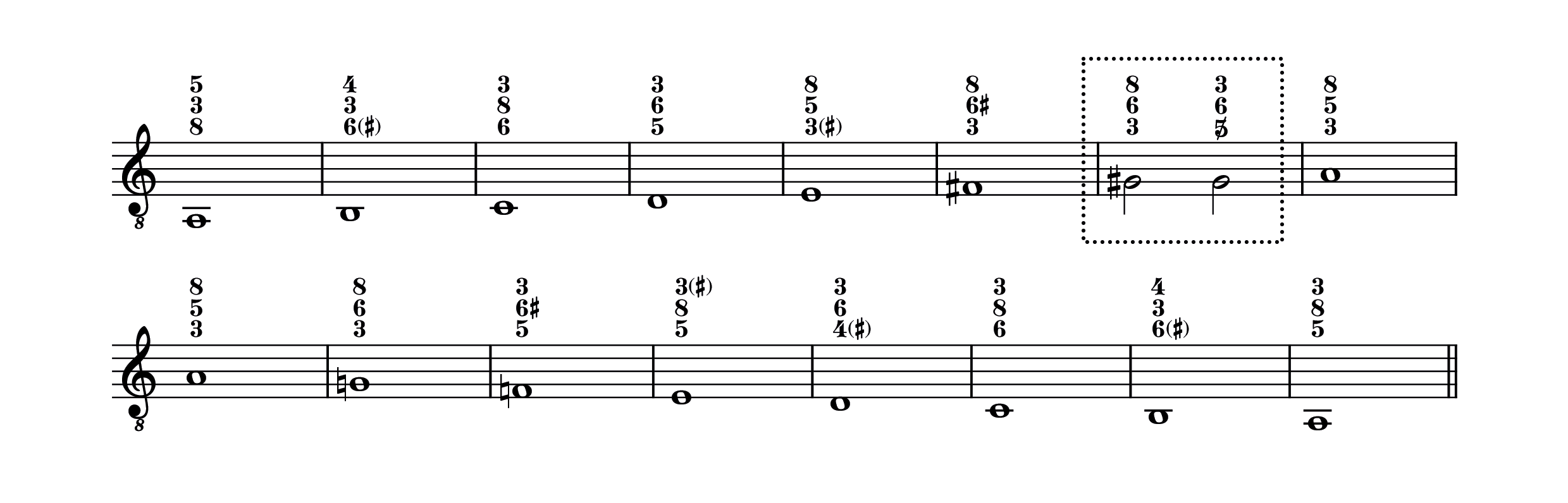
In figure 7 and 8 you can see Doisy’s harmonisation of the C major and a minor scale.
Doisy’s way of harmonising both the major and minor scale have some interesting peculiarities, setting them apart from Kirkman’s version of the RO. Apart from the small cadenza at the end of each scale there are some scale degrees harmonised in a quite ambigious manner.
Doisy’s harmonisation of the major scale
On the ➃, ➅ and ➆ scale degree, Doisy provides us with two slightly different harmonisations. Perhaps the bar should be played as notated, or perhaps we could interpret the chords as two alternatives on that scale degree. There is no clear statement in the Généraux Principes that this is to be considered as two different options. But perhaps like Fenaroli with his explanation of the RO, it is plausible that Doisy also gives us multiple options of harmonising the scale.
Fig. 7
Des Gammes et Cadences-harmoniques dans le Tons-mineurs et majeurs […] from Généraux Principes.

➃ (alt. 1) root position.
➃ (alt. 2) the common chord of the second scale degree – 1st inversion of d minor. NB! This harmonisation deviates from the standard RO, where the common chord of the second degree is replaced by the 2nd inversion of the dominant.
➅ (alt. 1) standard RO harmonisation of the scale degree.
➅ (alt. 2) the common chord of the second scale degree – 2nd inversion of d minor.
➆ (alt. 1) inversion of ➄.
➆ (alt. 2) inversion of ➄ with an added 7th.
Doisy’s harmonisation of the minor scale
Once again Doisy provides us with two alternatives, but only on the ➆.
Fig. 8
Des Gammes et Cadences-harmoniques dans le Tons-mineurs et majeurs […] from Généraux Principes.

➃ when ascending is harmonised in a standard fashion. When descending the scale the 2 is exchanged with the 3 (compare fig. 3 and 10) creating a nice suspension. This is resolved on the next scale degree.
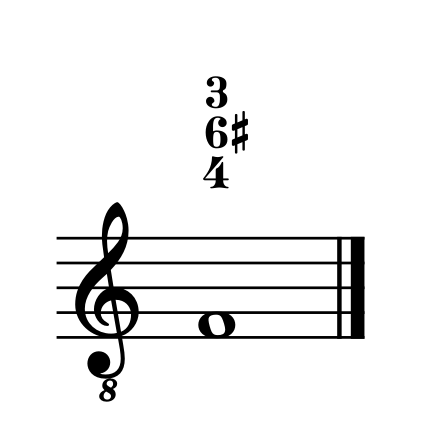
➅ when ascending the scale uses the 6#, thus becoming an inversion of the dominant chord to ➄ without the tonic (B7/F#).
➆ (alt. 1) inversion of ➄.
➆ (alt. 2) inversion of ➄ with an added 7th.
Nota bene
The dotted boxes highlights the bars where Doisy provides us with alternatives.
Fig. 9
Des Gammes et Cadences-harmoniques dans le Tons-mineurs et majeurs […] by Charles Doisy notated in partimento style.
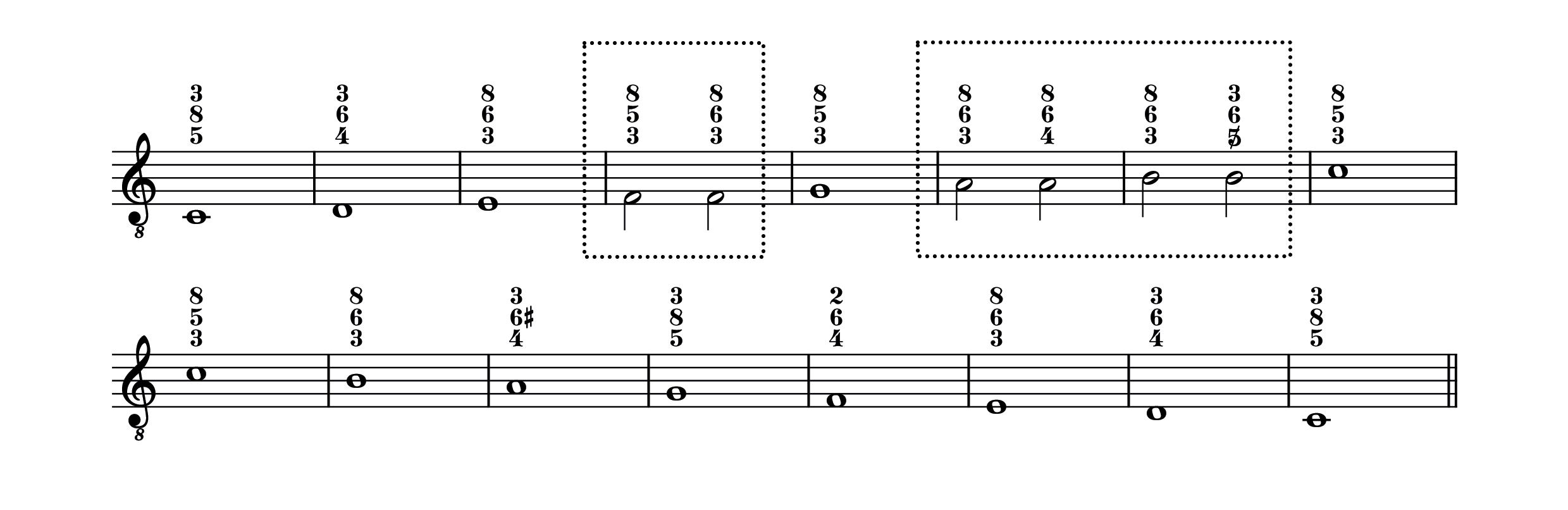
Fig. 10
Des Gammes et Cadences-harmoniques dans le Tons-mineurs et majeurs […] by Charles Doisy notated in partimento style.
Comparing Kirkman’s & Doisy’s descending minor ➅
On the descending minor scale, the two authors gives us presents to us two different versions of the same scale degree. Doisy includes the perfect fifth, giving the chord a clear dominant functionality. Kirkman on the other hand substitutes the 5 with the 4, which gives the chord a nice romantic flavour.
Fig. 11
Fig. 12
Alternative
Fig. 11.1
Alternative
Fig. 12.1

3
6#
5
➅
3
6#
4
➅

Doisys’s Gammes Harmoniques can be found on the pages 45-47 in his Principes Généraux.
The article continues on the next page...
 Karl Michelson